 光智汇联
The question we address
How can you build a product family with less duplicated development?
Review the service and its applications. Scope, deliverables and fees are agreed following discussion.
Discuss the service →LIGHTING PRODUCT PLANNING
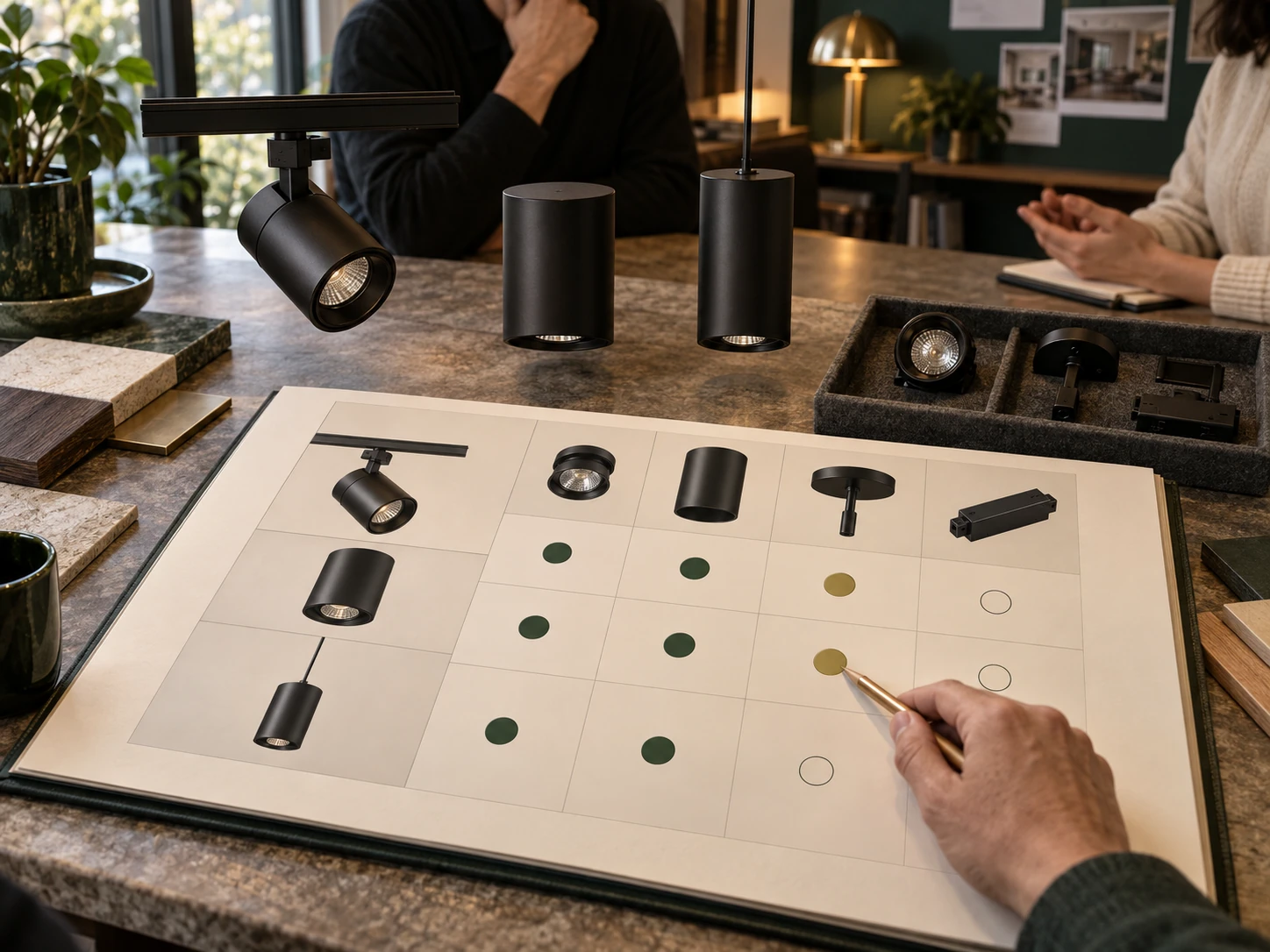
Organise sales ranges around how customers choose products, then define shared platforms, configuration differences and system accessories to identify what needs development and what can be reused.
1 platform · 3 ranges · 20 working days · 2 consolidated revisions
Prepare your brief →Submit project information after the initial discussion. Work is scheduled once the information is complete and the scope is agreed.

Illustration of service deliverables in use
How can you build a product family with less duplicated development?
One planned platform, up to three sales ranges and six representative configurations. Includes a candidate compatibility matrix for five groups of system accessories and the associated engineering verification requirements. Detailed design, drawings, BOMs and physical testing are agreed separately. Includes two consolidated revisions. Delivery is within 20 working days after complete information is received and work is authorised. Revisions address consolidated feedback within the agreed objectives; new objectives are scoped separately.
Covers product architecture and platform requirements. Detailed mechanical design, drawings, BOMs and prototype testing are covered by development services. Product coding, database entry and configuration tools can be scoped separately; existing matrices are reused.

